Nine Elms Storage Recycling and Sustainability
 At Nine Elms Storage, sustainability is built into the way we work, from everyday site operations to the way items move through the local waste stream. Our approach to Nine Elms Storage recycling is designed to reduce landfill use, support circular-economy habits, and make it easier for customers and partners to store responsibly. We are committed to a recycling percentage target of 95% of all non-hazardous operational waste being recycled, reused, or recovered, with the remaining fraction handled through compliant disposal routes where recovery is not possible.
That target reflects the reality of an urban storage environment: cardboard, mixed plastics, broken pallets, shrink wrap, office paper, and end-of-life fixtures all need different treatment. To support this, we separate waste at source wherever practical and work with local processors who can sort materials efficiently. In the boroughs around Nine Elms, waste separation is increasingly specific, with residents and businesses encouraged to keep paper, glass, metals, food waste, and general waste apart. We mirror that best-practice approach in our own operation, because the more carefully materials are separated, the higher the chance they can be recycled into something useful.
We also recognise that sustainability in storage is not only about waste. It is about the full journey of a stored item, from collection to sorting, repurposing, and onward movement. When suitable, we prioritise re-use before recycling, especially for shelving, packaging, and office goods. This helps extend product life and lowers the carbon impact of buying new materials. By keeping those principles at the centre of our Nine Elms storage sustainability policy, we can support customers who want a cleaner, greener way to manage their belongings and stock.
Local transfer stations and responsible waste handling
 For larger volumes of waste, we use local transfer stations that can consolidate and route materials to specialist recycling facilities. This is especially important in a dense London district like Nine Elms, where efficient logistics reduce unnecessary mileage and keep vehicle movements lean. Transfer stations help separate recyclable streams such as clean cardboard, mixed paper, rigid plastics, metal fixtures, and wooden packaging. They also make it easier to identify items that need special handling, including broken electronics or damaged batteries, which must never be placed in general waste.
Local facilities in and around Wandsworth and neighbouring boroughs support a practical, city-based recycling network. Boroughs in this part of London tend to follow clear separation rules for household and commercial waste, and businesses like ours benefit from that same structure. By working within those systems, Nine Elms Storage recycling services can align with local collection requirements and send materials to the right destination first time. That means fewer contamination problems, better recovery rates, and less material lost to landfill.
We also keep an eye on the specific waste patterns associated with storage and removals. Cardboard from packing, stretch wrap from pallets, and mixed office clear-outs are common examples. These materials can be recycled successfully when kept clean and sorted, so our site procedures emphasise segregation and compacting where appropriate. It is a simple but effective way to improve the performance of our recycling at Nine Elms Storage programme and reduce the environmental footprint of everyday operations.
Partnerships with charities and reuse organisations
 A sustainable storage business should not stop at recycling. We actively look for opportunities to partner with charities and reuse organisations that can benefit from items no longer needed by customers or the business. Many belongings that are no longer wanted are still in good condition: household items, furniture, small appliances, books, and office equipment can often be passed on for re-use rather than broken down immediately. These partnerships help keep usable goods in circulation and support local community causes at the same time.
Where appropriate, we work with charities that can redistribute donated items to families, community groups, and people setting up homes or workspaces on limited budgets. This approach is especially meaningful in a fast-changing part of London where relocation and refurbishment are common. Instead of sending everything to waste processing, we look first for a second life. That decision reduces demand for virgin materials and fits the wider sustainability goals of Nine Elms storage sustainability.
Charitable reuse also plays an educational role. It reinforces the idea that waste is not always the end of the story; often it is simply the start of a new use. By supporting local donation pathways alongside formal recycling, we give customers a more responsible option for clearing items from storage. The result is a more circular model, where the value of products is preserved for longer and the environmental cost of disposal is reduced.
Low-carbon vans and cleaner transport
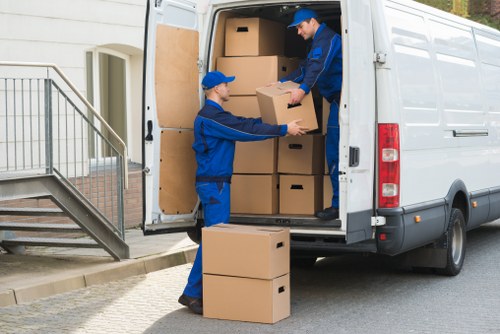
 Transport matters just as much as sorting. That is why we are steadily introducing low-carbon vans into our fleet and using route planning to reduce unnecessary miles. Where possible, vehicles are chosen for lower emissions, better fuel efficiency, and reduced idle time in traffic. In a busy location like Nine Elms, cleaner transport can make a substantial difference to local air quality and to the overall carbon profile of storage operations.
Our vehicle strategy is supported by better scheduling, fewer empty journeys, and consolidated collections and deliveries. That means we can move goods efficiently while lowering emissions per trip. For a service focused on storage and movement, this is one of the clearest ways to reduce impact without compromising reliability. It also complements the other elements of our Nine Elms Storage recycling work by ensuring the environmental gains from recycling are not offset by avoidable transport emissions.
We are also mindful of the type of loads our vans carry. Cleanly separated recycling, reusable goods, and carefully packed items all travel more efficiently and safely. This helps avoid damage, contamination, and wasted journeys. As the local area continues to prioritise cleaner air and better waste performance, our low-carbon approach supports the broader direction of travel across the boroughs.
Putting sustainability into daily practice
 For Nine Elms Storage, sustainability is not a one-off initiative but an everyday standard. The combination of a 95% recycling target, local transfer stations, charity partnerships, and low-carbon vans creates a joined-up system that keeps materials moving in the right direction. It also reflects the practical realities of London waste management, where borough-level separation, contamination control, and efficient collection all matter.
We will continue to improve our methods by reviewing waste streams, expanding reuse options, and finding cleaner transport solutions. In a district where development and movement are constant, there is a strong case for a storage provider to lead by example. By making responsible decisions at every stage, Nine Elms Storage sustainability can help protect resources, reduce emissions, and support a more circular local economy.